CLERMONT, FL – Losing a tooth is difficult enough. Learning that you’ve also lost jawbone can make replacing that tooth feel even more complicated. But does bone loss mean dental implants are no longer an option?
Not necessarily.
At Clermont Periodontics & Implant Center, Dr. Kerwin Scott helps patients understand their options for replacing missing teeth, including situations where bone loss may affect dental implant placement.
Why Does Bone Loss Happen After Losing a Tooth?
Your jawbone needs regular stimulation to maintain its structure. Natural tooth roots help provide that stimulation when you chew.
When a tooth is lost or extracted, the surrounding jawbone can gradually shrink because it no longer receives the same stimulation.
Bone loss may also result from:
Advanced periodontal disease: Infection and inflammation can damage the bone supporting your teeth.
Long-term tooth loss: The longer a tooth remains missing, the more the surrounding bone may change.
Dental infections: Certain infections can damage the bone around a tooth.
Trauma or injury: An accident or damaged tooth may affect the surrounding bone.
These changes matter because dental implants need adequate bone support to remain stable.
Can You Still Get Dental Implants With Bone Loss?
Yes, in many cases, dental implants may still be possible even if you’ve experienced bone loss.
The answer depends on how much bone remains, where the bone loss has occurred, your overall oral health, and the type of restoration being considered.
Some patients may have enough healthy bone to support an implant without additional procedures. Others may need treatment to rebuild or supplement the available bone before implant placement.
The first step is a comprehensive evaluation.
How Does a Periodontist Determine Whether You Have Enough Bone?
A periodontist is a dental specialist trained in the supporting structures of the teeth and the surgical placement of dental implants.
During a dental implant consultation, Dr. Scott evaluates factors such as:
The amount and quality of available jawbone
The location of the missing tooth or teeth
The condition of your gums and remaining teeth
Your medical and dental history
Whether additional procedures may be necessary
Three-dimensional imaging, such as a cone-beam CT scan when indicated, can help evaluate the jawbone and surrounding anatomical structures before surgery.
This information helps determine which treatment options may be appropriate for your individual needs.
What If You Don’t Have Enough Bone for Dental Implants?
Insufficient bone doesn’t always eliminate the possibility of dental implants. Depending on the situation, additional procedures may be considered.
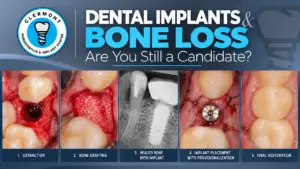
1. Bone Grafting
Bone grafting is a surgical procedure used to rebuild or supplement areas where jawbone has been lost.
Grafting material is placed in the affected area to support new bone formation and help create a more suitable foundation for a dental implant.
Some patients require bone grafting before implant placement, while others may be candidates for grafting at the same time as implant surgery.
2. Sinus Augmentation
When replacing missing upper back teeth, the available bone may be limited because of the location of the maxillary sinus.
In certain cases, a sinus augmentation, sometimes called a sinus lift, may help increase the amount of bone available for implant placement.
Not every patient with upper-jaw bone loss needs this procedure.
3. Alternative Implant Treatment Planning
For patients missing several teeth or an entire arch, the position and distribution of the remaining jawbone may influence the treatment approach.
In selected cases, strategically positioned implants may provide an option without grafting every area of bone loss.
The appropriate approach depends on the patient’s anatomy, oral health, and restorative goals.
Is It Better to Replace a Missing Tooth Sooner Rather Than Later?
Generally, it’s beneficial to discuss tooth replacement options early.
Jawbone changes can begin after tooth loss and may continue over time. Although the rate and extent of bone loss vary from person to person, waiting can sometimes make future implant treatment more complex.
If a tooth needs to be extracted, ask whether bone preservation procedures may be appropriate at the time of extraction.
Planning ahead can help preserve future treatment options.
Are Dental Implants Permanent?
Dental implants are designed to provide a long-term solution for missing teeth, but they are not guaranteed to last forever.
Their success depends on factors including bone support, oral hygiene, general health, bite forces, and regular professional maintenance.
Patients with a history of periodontal disease may require additional monitoring to protect their implants and surrounding tissues.
Don’t Assume Bone Loss Means You Can’t Get Dental Implants
Being told that you have bone loss can be discouraging, especially when you’re hoping to replace missing teeth.
However, advancements in implant dentistry and bone reconstruction have expanded treatment possibilities for many patients.
The most important step is determining what is clinically appropriate for your specific situation.
At Clermont Periodontics & Implant Center, Dr. Kerwin Scott provides individualized evaluations and surgical treatment planning for patients considering dental implants.
Schedule a Dental Implant Consultation
Clermont Periodontics & Implant Center
1381 Citrus Tower Blvd., Suite 101
Clermont, FL 34711
Call or text: 352-995-3225
Visit www.clermontperioimplantcenter.com to learn more or request an appointment.
This article is intended for educational purposes and does not replace an individualized dental evaluation.